
A tax-efficient way to sell your business to your employees.
Employee ownership trusts allow owners to sell their business, enjoy generous tax reliefs, and reward the people who work in it.
We use financial modelling to help you understand what's affordable, what's sustainable, and how to strike the right balance between sellers, management and employees.



18 years' experience advising on employee ownership — £500m+ of EOT transactions
A different way to sell your business
Selling to an employee ownership trust is a genuine business sale. Instead of selling to a trade buyer or private equity, the shares are sold to a trust that holds the business on behalf of its employees.
As with most exits, the consideration is linked to the future performance of the business. Trade and private equity sales commonly involve earn-outs, deferred consideration, warranty exposure and post-completion price adjustments. In an employee ownership sale, careful planning and the use of third-party finance can often deliver a substantial upfront payment, with the balance funded over time from future profits. How the deal is structured matters, because it affects risk, incentives and outcomes for everyone involved.
Where the statutory conditions are met, selling to an employee ownership trust is the most financially generous and commercially flexible tax relief available to UK business owners. It is deliberately designed to encourage this form of ownership, and for many owners it provides a way to realise value, pay significantly lower tax, and pass the business on to the people who have helped build it.
Funding an employee ownership sale
Employee ownership trusts are funded from the future success of the business. That means there is a practical limit to what can be paid, when it can be paid, and how much risk each party takes along the way.
We start with financial modelling to help owners understand those constraints and make informed decisions before committing. The aim is not to maximise one outcome at the expense of others, but to strike a balance that rewards sellers fairly, keeps management motivated, and allows employees to benefit as the business grows.
How structure affects risk and reward
In an employee ownership sale, everyone ultimately shares in the same outcome. But incentives drive behaviour, and behaviour drives performance.
Get the balance right and the business is well-funded, well-led and motivated to grow — increasing the value available to sellers and employees alike. Get it wrong and the opposite happens. That is why structure, funding and incentives need to be thought through carefully, using evidence rather than assumptions.
See how employee ownership could work for your business
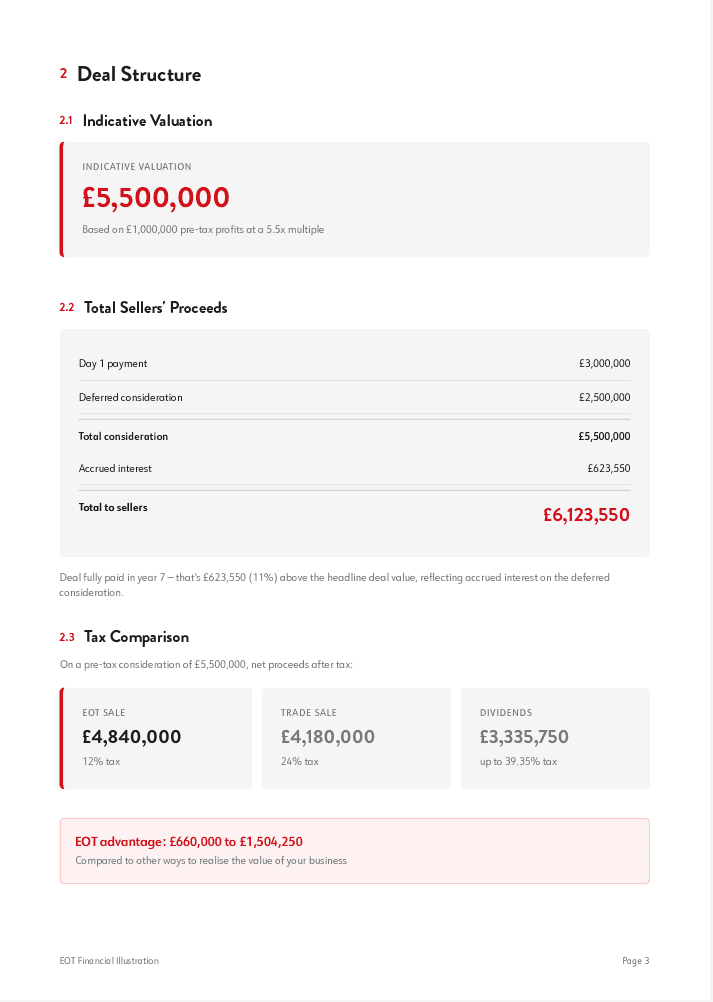
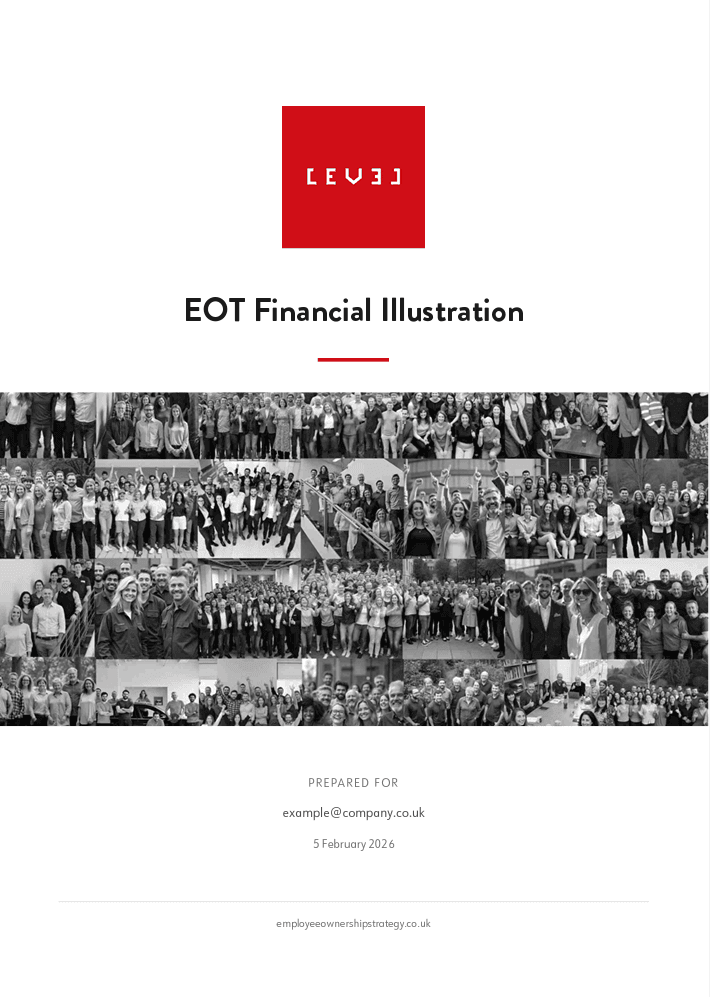
Use our online calculator to explore how an employee ownership sale might work based on your business's profitability — and choose to receive a full financial illustration.
Try the calculator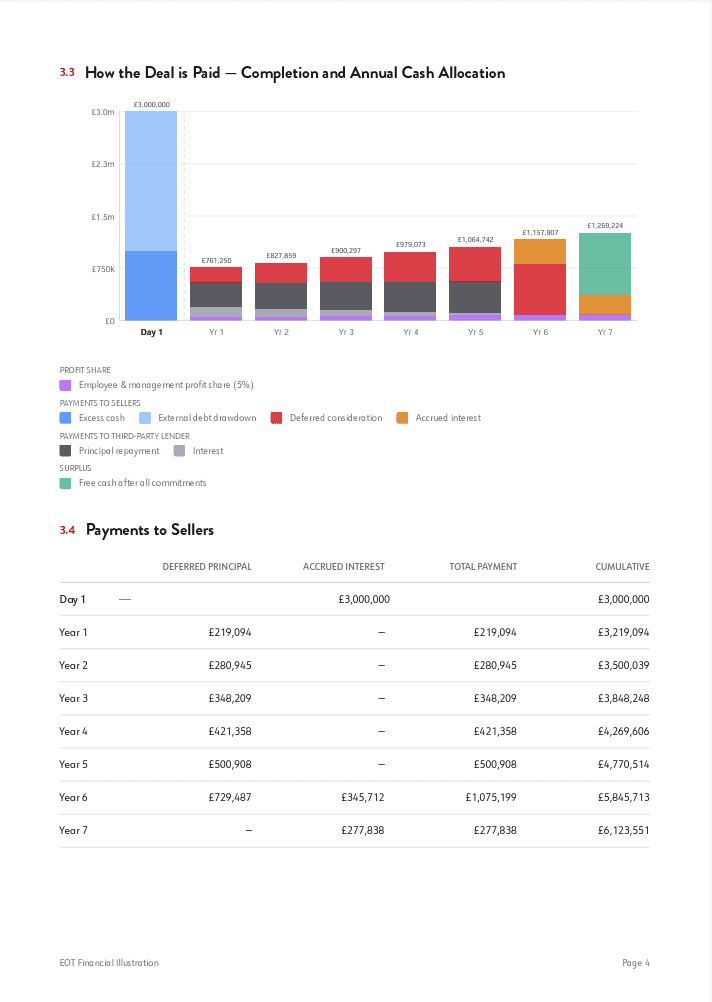
Businesses best suited to employee ownership
Employee ownership tends to work best for owners of profitable businesses who want a considered exit, are open to receiving value over time, and care about the long-term success of the company and its people.
About us
Your business sale is led by Robin Hartley, a specialist with nearly 20 years of experience in employee ownership. Robin has advised on over £500 million in EOT transactions, blending legal expertise with a background in Big-4 accountancy and financial services.
Robin is a partner at Level, an award-winning firm recognised in The Times Best Law Firms and ranked in Chambers & Partners.
More About Us
Learn more about employee ownership trusts
If you would like to understand the structure in more detail before looking at numbers, we have a short, plain-English explanation of how employee ownership trusts work and how they are funded.
Learn about Employee Ownership TrustsContact
If you would like to talk through your situation, you're welcome to get in touch.
robin.hartley@level.lawA first conversation is exploratory and confidential, and there is no obligation to proceed.